Throwback Thursday

Have you ever looked at an old photo and wondered about its history? Among the Nemaha County Historical Society’s collection is today’s Throwback Thursday image of the Goffs Union Depot and R.R. Eating House.

To uncover its story, a search through historic newspapers led to an article in the March 18, 1910 issue of The Goffs Advance, shedding light on the history of the Eating House and its significance.

THE NEW R. R. EATING HOUSE

In the now going on three weeks that the Van Noy R. R. eating house has been in operation here, the business has been fully up to the most sanguine expectations of the management, so we were informed upon our first visit of inspection and errand of gathering data for publication, made Tuesday forenoon.

The appointments and general arrangement are most pleasing in effect and utility, and the service is so tasteful and appetizing a character as to appeal favorably to the most fastidious. The storeroom and larder are both models of well-kept departments and amply provided with the choicest and best the market affords.

The kitchen is at once suggestive of the most wholesome as regards the cuisine features. In fact, every part of the work, from the preparation of the bill of fare to its serving, is performed in a manner as only experts in the business might be capable.

A large and commodious refrigerator is an important fixture, and every requirement of the pure food law is religiously lived up to.

The upper part of the building is fitted up with five sleeping rooms, a bathroom, and a linen room, all with the comfort of those for whose use (the help) they are intended, well looked after. A force of seven people is on the payroll, and they are all kept busy.

To Mr. and Mrs. Nelson, chef and cashier and manager, respectively, is due the credit for the clockwork routine with which the business of the place is conducted.

Lastly, the interior finish of the entire building is in keeping with the furnishings. Counters, stairway, and alcoves are of dark oak, finished in hard oil. The ceiling is a steel composition in beautiful art square designs and painted a delicate green tint.

The job of painting, both inside and out, is by our own H. K. Campbell, the “Brush of Goff,” and speaks out loud for him as possessed of an eye for the artistic.
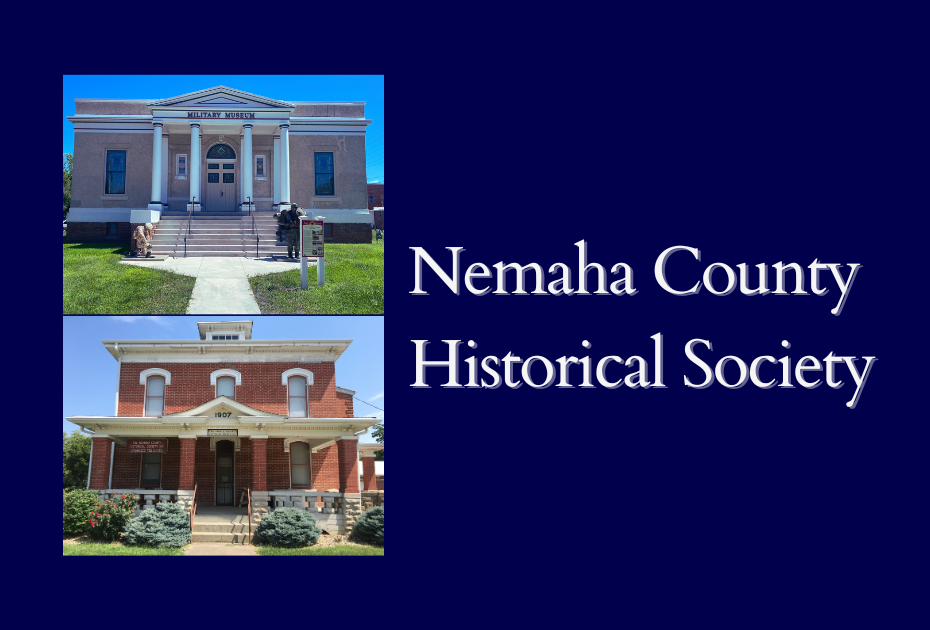
Collections Policy Under Consideration

As the Nemaha County Historical Society is in the process of upgrading its museum management software, it is also reviewing the policies and procedures involved in the use of that software. At the annual meeting on Feb. 11, 2025, the board of directors were presented with a proposed collection policy. This proposed policy was developed with the help of Kansas State Historical Society museum staff.

A copy of this proposed policy can be found on the society’s website listed under the HOME tab. The board will consider adopting (or amending) the proposed policy at their next quarterly meeting.

Proposed Collections Policy

Stories from Yesteryear

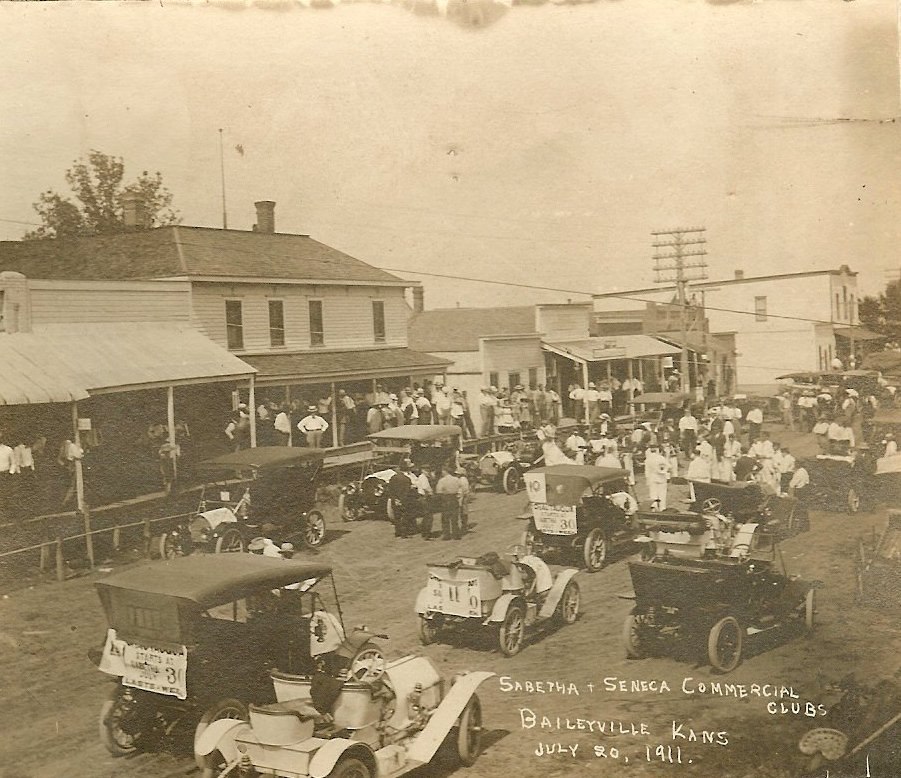
In July 1911, the Sabetha Commercial Club embarked on a county-wide tour. As part of the journey, the Seneca Commercial Club escorted the Sabetha group from Baileyville to Seneca. This event is commemorated in a historic photo of Baileyville’s Main Street and documented in the July 27, 1911 issue of the Courier Democrat.

Seneca’s Good Will.

On Thursday, the Sabetha Commercial Club, advertising their Chautauqua, made a booster junket in eighteen automobiles via the towns of Bern, DuBois, St. Benedict, Axtell, Baileyville, Seneca, and Oneida.

On Wednesday evening, members of the Seneca Commercial Club met in the clubroom and declared in favor of making up an escort of Seneca cars and piloting the Sabetha tourists from Baileyville into this place. Fifteen cars in all responded to the call, and led by C. C. K. Scoville’s big Buick, lined up promptly in Baileyville at 2:30 after a delightful run west.

The Sabetha cars were a little late pulling into Baileyville, and it was considerably past three when the Sabetha Band formed in a circle and rendered several selections for the assembled townsfolk and the Seneca escort.

Leaving the Baileyville streets, the thirty-two cars formed in alternate Sabetha and Seneca order and proceeded eastward. At Seneca, the Chautauqua boosters were piloted through the prettier Seneca streets and finally brought to a halt in front of the bandstand, where Judge Emery, as president of the Commercial Club and in the absence of Mayor Rucker, extended a short address of welcome.

The Judge made a good speech and expressed in a frank and forcible way the goodwill which Seneca bears toward its sister city and endorsed the Sabetha Chautauqua in high terms.

Rev. Hamilton of Sabetha made a response, expressing the appreciation of the Sabetha people for the reception tendered them and extending a cordial invitation to Seneca people to take advantage of the eight-day open-air entertainment, which opens there Sunday, July 30.

The Band, and Sabetha has a dandy this year, occupied the intervals with several well-played pieces. A few minutes later, the eighteen Sabetha cars took a leisurely course out of town, no doubt convinced that their excursion would be fruitful in one town at least along the route.

Check out our website for more information about the Nemaha County Historical Society.